

She slips an anime figure of a show you once mentioned into your bag when you're not looking. Two hours later, she's nitpicking the way you folded a dish towel and reporting it to the manager. At lunch she takes you to a festival and laughs at your jokes and gently punches your arm. By 3pm she's piling tasks on you in a way that eats fifteen minutes of your only break.
And nobody else at work gets either version of her. Not the gifts. Not the punishment. Just you.
If you've been in Japan less than three years and you're reading this thinking "wait, I know someone exactly like this," you are not the first. This pattern shows up again and again in foreigner-coworker stories. And almost every time, the person trapped inside it is stuck on the same question.
What is she actually doing? Does she like me? Hate me? Want something? Is this normal?
The honest answer is not that she's confusing. The honest answer is that you have no Japanese peer in your life you can text a screenshot to and ask.
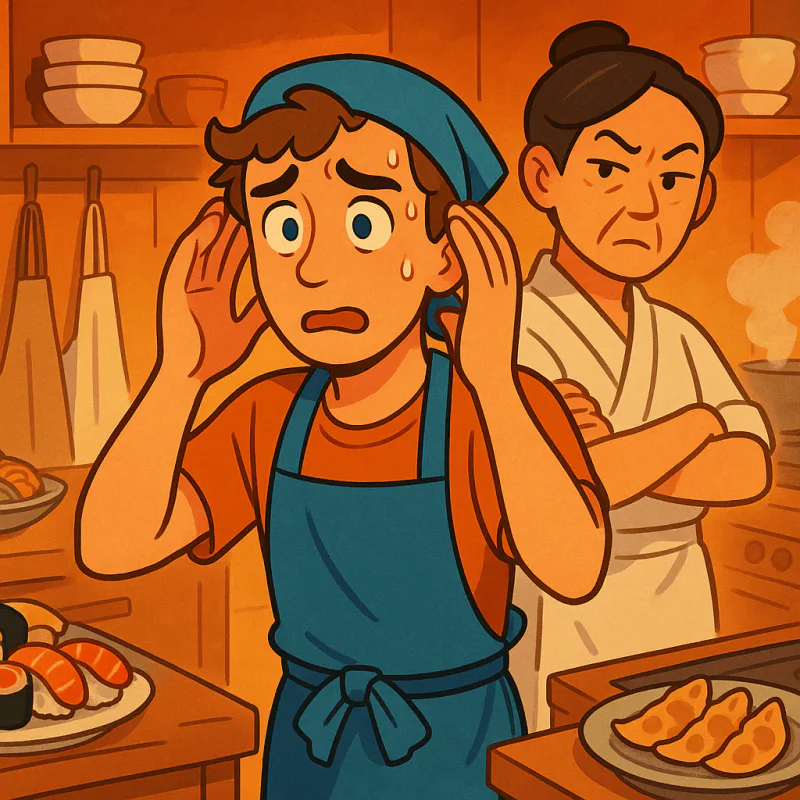
Japanese workplace relationships come with layered social codes that are genuinely hard to read from the outside, especially when someone older mixes indirect affection with strict sempai behavior in the same eight-hour shift.
Here's the thing Japanese peers know instinctively that you do not:
None of this means her behavior is fine. Some of it might not be. The piling-on of tasks that eats your break is a real problem regardless of culture. But the meaning of the signals, whether this is affection, harassment, maternal projection, mentorship, or all four blurred together, is not something you can figure out alone with Google.
You need a Japanese friend, close to your age, who doesn't work with you, and whom you can just ask.
And here's the trap: most foreigners in their first couple of years don't have that friend. So the question festers. And the coworker becomes the whole universe.
Look at the foreigner in that situation carefully. Usually the story is not "this person is uniquely unbearable." The story is "this person is the loudest Japanese relationship in my life, because she's basically the only Japanese relationship in my life."
If she's your only real Japanese contact, then:
This is not a workplace problem. This is a social monopoly problem. One person is doing the job of fifty people: your friend, your cultural interpreter, your workplace mentor, your source of affection, your source of stress, your entire lens on "what Japanese people are like."
No single human being can carry that load without turning into a confusing, all-consuming figure in your head. It's not her fault. It's not yours. It's a structural issue caused by you not having enough Japanese people in your life.

Imagine for a second you had a Japanese friend the same age as you. Not a coworker. Not a senior. Not someone at your company. Just a peer you grab coffee with on weekends.
You show her your phone. You tell her the whole story. The gifts, the lunches, the strictness, the piling tasks, the teasing coworkers.
She would probably do three things within five minutes.
First, she would separate the emotional signals from the workplace signals. "The gifts and the festival? That's an older coworker adopting you as a kind of kid. It happens. She means well." Suddenly half the confusion evaporates.
Second, she would flag the part that's actually a problem. "The tasks eating your break? That's not cultural. That's a staffing problem and a power thing. You can talk to your manager about that specifically. It's separate from the rest."
Third, she would tell you how to behave so the whole thing defuses. "Thank her for the gifts but don't make a big deal out of them. Laugh at the teasing but don't play along. When she gives you a workload that cuts your break, say clearly, sumimasen, kyuukei wo chanto toritain desu ga (I'd like to actually take my break). She will back off. Japanese senpai dynamics are very responsive to a calm, direct ask. You just have to know it's allowed."
That's it. A thirty-minute coffee with a Japanese peer, and the whole fog lifts. The confusing boss becomes a comprehensible set of separate signals, some of them nice, some of them normal, one of them worth pushing back on.
You cannot get that from the internet. You get it from having someone in your life you can just ask.
The structural reason is almost painfully simple.
Most foreigners in their first two years in Japan meet Japanese people mostly through:
Notice who's missing. Your peers. The Japanese people your age who would be your friends in a normal, power-balanced way. They exist. There are millions of them. They are not at your workplace by accident, because workplaces are, by design, hierarchical.
So the foreigner ends up with a Japanese social circle made entirely of people who have authority, experience, or service-role dynamics over them. Senpai. Managers. Landlords. Teachers. Hairdressers. Convenience store regulars. Nobody equal. Nobody you could call at 10pm and say, "hey, does this text from my coworker sound weird to you?"
And without that person, every workplace interaction gets inflated into a mystery that you carry alone.

There is no clever move here. You cannot out-analyze your way out of a Japanese workplace dynamic. You cannot decode your senpai by reading enough blog posts, including this one.
The only thing that actually pulls people out of this loop is putting at least one peer-level Japanese person in your non-work life. Someone you'd meet on a weekend. Someone with no power over you. Someone who would say "that's normal" or "that's not normal" with zero political cost.
A few specifics that actually work:
If you do this, within a few weeks something surprising happens. The senpai at work stops being the biggest, loudest, most confusing figure in your Japanese life. She shrinks back down to being what she always was: one person, doing a specific job, with a specific mix of kindness and flaws. You stop decoding her. You just work with her.
Because you have other people now. She no longer has a monopoly on your attention.
In case you needed permission: she is probably not scheming. She is most likely a tired 47-year-old single mother who has worked at the same restaurant for two decades, who finds the young new foreigner charming in a way she can't quite articulate, and who also genuinely thinks you need to work harder and fold the towels better.
Both things are real. Both things come from her. You don't have to resolve them into one story.
What you have to do is stop letting her be the whole story of your time here.
One peer. Not five. Not a network. Not a community. One Japanese person your age, who lives within a 30-minute train ride, who doesn't work with you.
Make Japanese Friends On a Live World Map
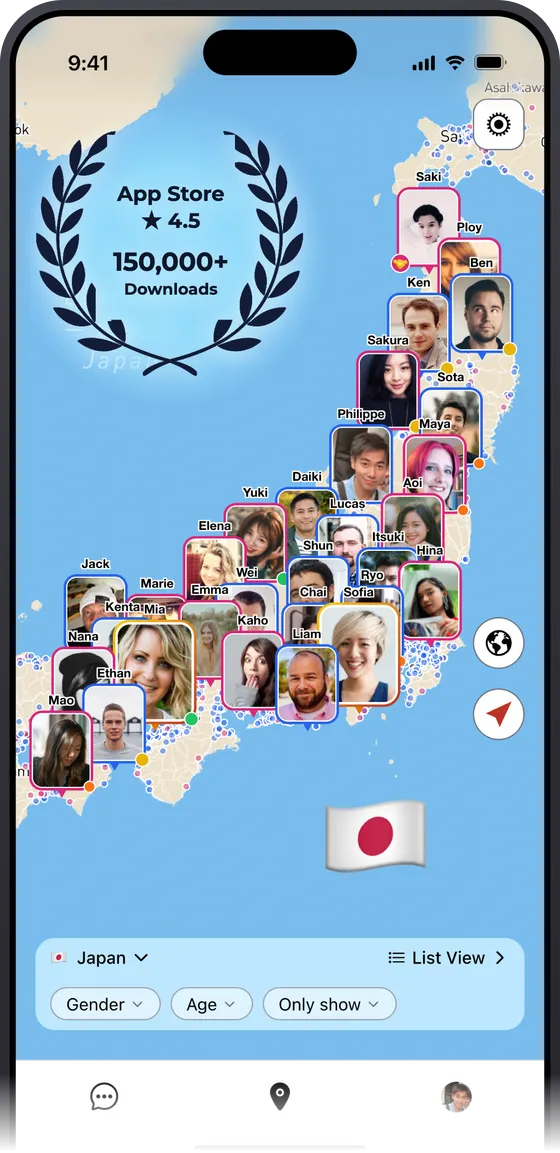
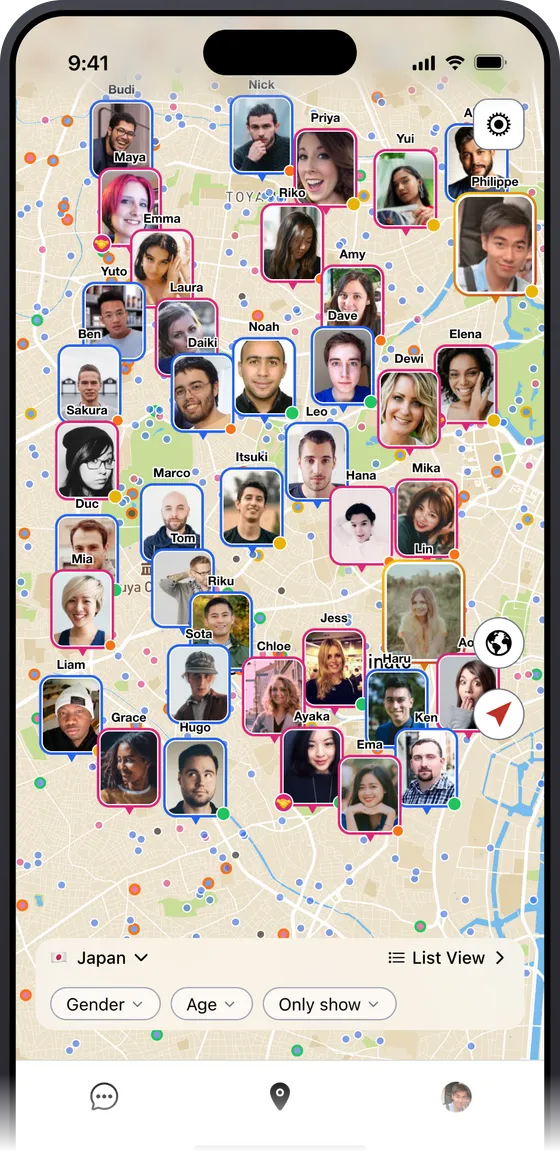
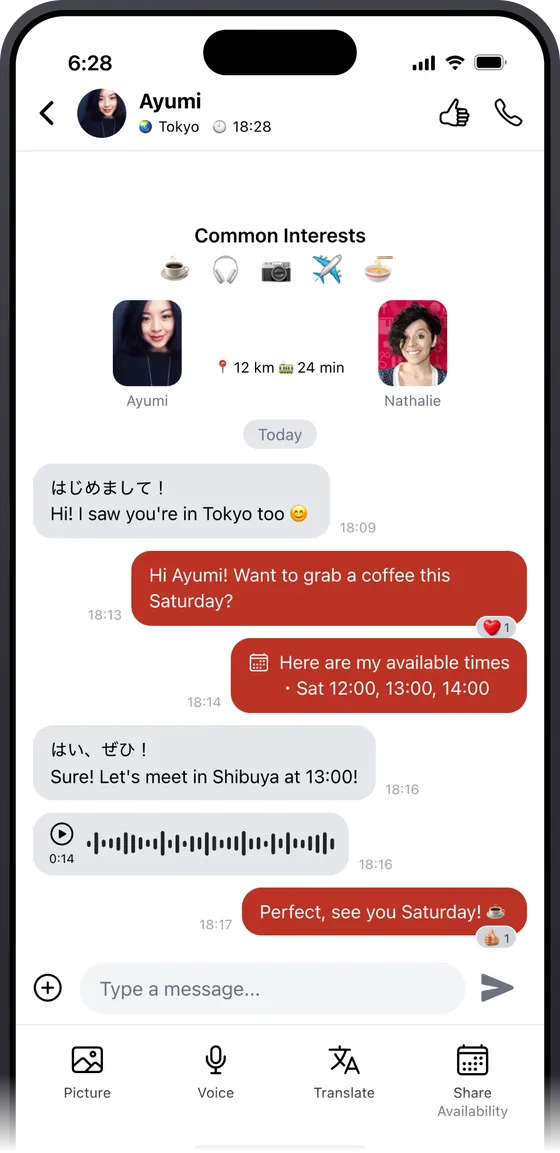


SewaYou is a map-based app built for exactly this. You see who's near you, you propose a coffee, and because they're two stations away instead of twelve time zones, you both actually show up. The goal is not romance, not language tutoring, not a pen pal. The goal is one recurring human in your week who has no authority over you and who you can text a screenshot to when your senpai does something weird.
The senpai isn't the problem. Being alone with the senpai is. Put one peer in your week, and watch how fast Japan starts feeling readable again.


