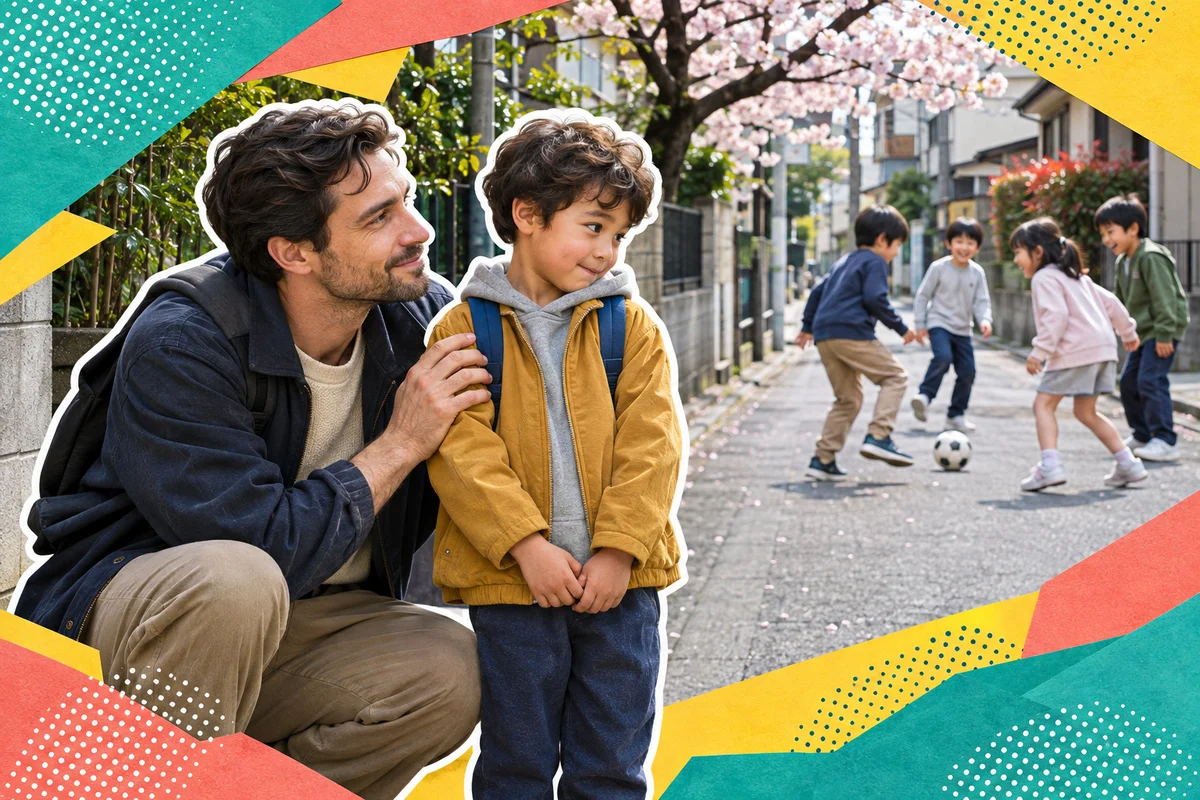
It usually sneaks up on you. Your five-year-old used to switch between English and Japanese without thinking. Then one day a grandparent asks a simple question in Japanese, and your kid answers in English. Or doesn't answer at all.
You look at the gap and feel the clock ticking. School starts soon. Friends' kids seem to chatter in perfect Japanese. So you do what most parents do first: you search for more lessons.
Lessons can help. But in my experience, the families who actually close the gap tend to fix something else first. Kids speak the language of their friends.
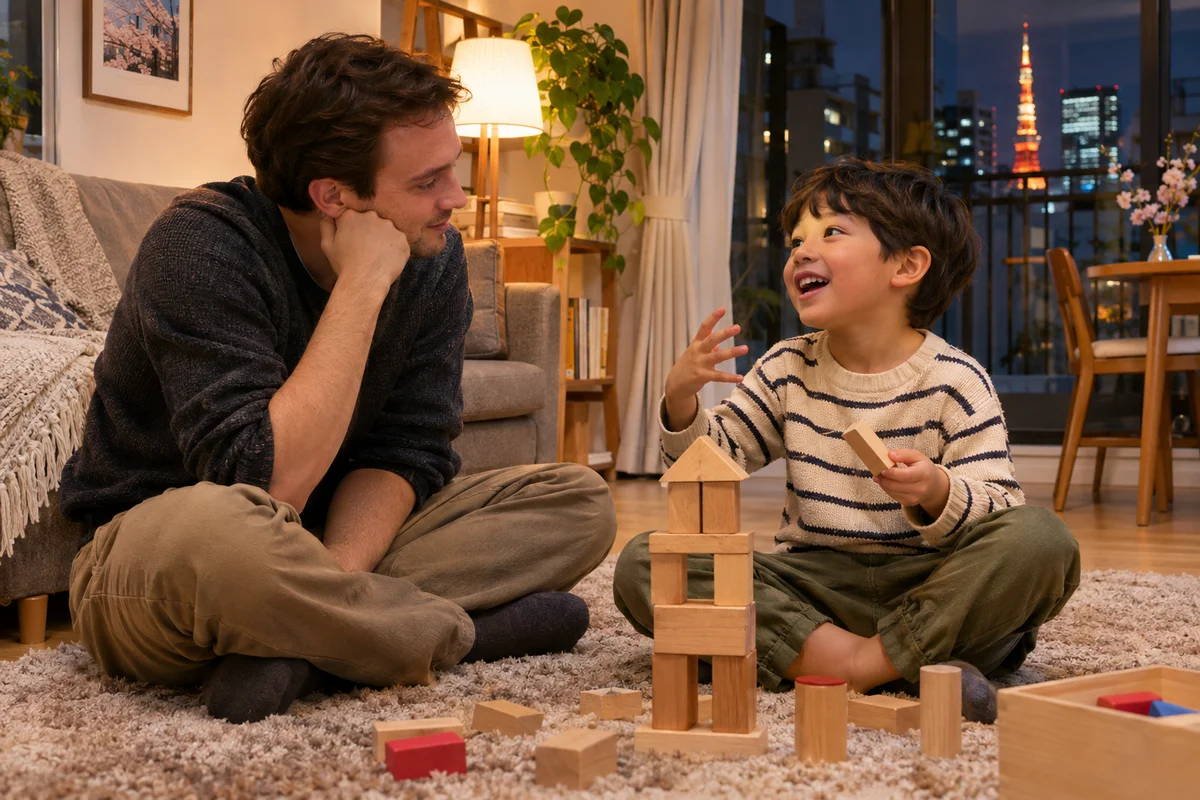
Children are ruthlessly practical. They use whatever language gets them what they want, fastest. If the people they love most, play with most and argue with most all speak English, English wins. Not because they are lazy, but because it works.
Think about a typical week for a kid in an international school. English at home with at least one parent. English in the classroom. English on the playground. Japanese shows up a few times a week as a subject, the same way math does.
From the child's point of view, Japanese is something you study, not something you live in. And nobody becomes fluent in a subject.
Worksheet programs, online tutors and weekend schools all have a place. Reading and writing in particular need structure, and plenty of families swear by a daily worksheet habit for building kanji and reading.
The trouble is speaking. A child can finish a page of hiragana perfectly and still freeze when another kid at the park asks, "Do you want to play?" Classes build knowledge. Confidence in conversation comes from a lot of messy, low-stakes talking with people who don't switch to English when you hesitate.
There is also a quiet risk. If Japanese only ever appears as homework, some kids start to link it with being corrected. Push too hard and it can feel like a chore they want to escape. Pressure tends to make kids go quiet.
The most useful question I have heard a parent ask is this: where in my kid's week is Japanese the only option?
If the honest answer is "nowhere," that is the thing to change. A few ideas that tend to work:
None of this replaces a good class. It gives the class something to attach to. Japanese has to feel useful.
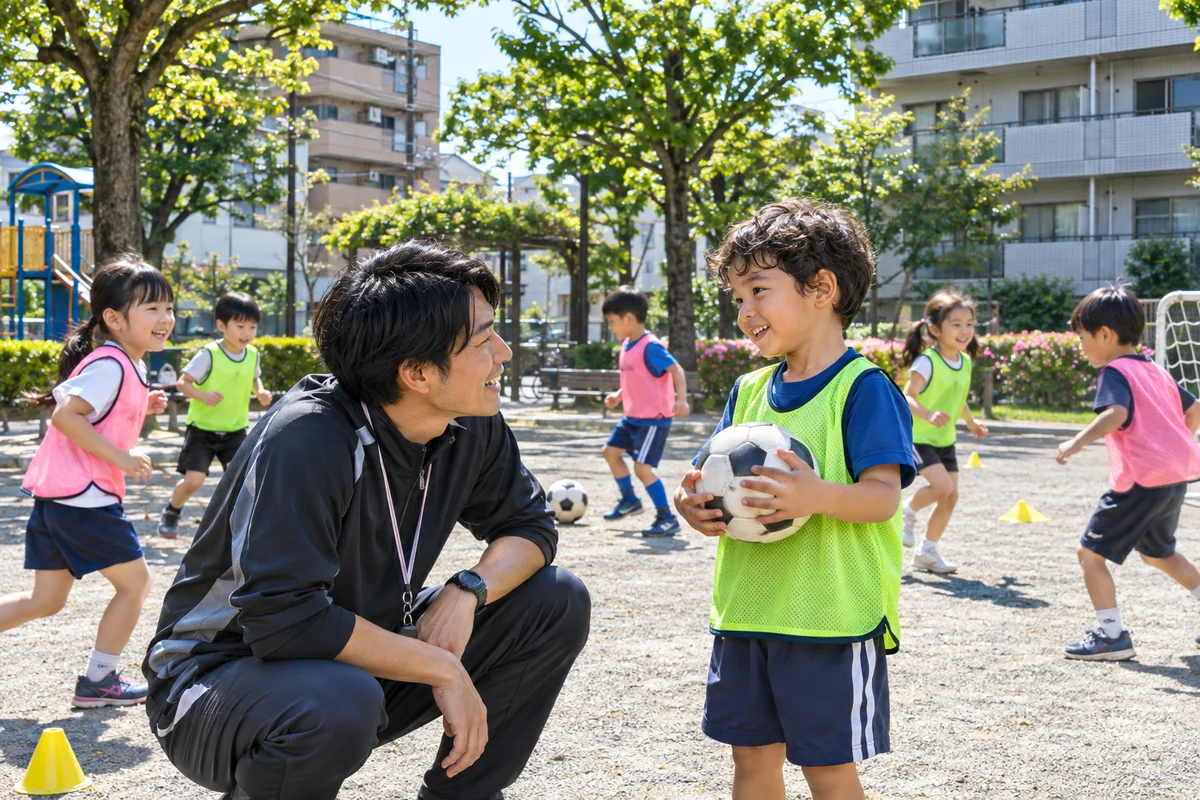
Here is the uncomfortable bit. Small kids don't choose their friends. Their parents do, mostly by accident. Playdates happen between families whose parents get along, chat at pickup and text each other on a Saturday morning.
So if your own social life in Japan runs mostly in English, your kid's social life probably does too. The other international school families are great, and they are often the people you see most. But their kids will usually default to English with yours, just like yours do at home.
I have seen this change for families once a parent made even one or two Japanese-speaking friends nearby. Suddenly there is a family to meet at the park. A neighbor whose kid is the same age. Someone who mentions the local kids' club everyone joins. Your friendships shape their language.
It is also good for you. If you are the parent with weaker Japanese, those friendships are your practice too. Kids notice when Japanese is the language their parent uses to laugh with someone, not just to order at a counter.

Meeting other adults as a busy parent is hard. Pickup chats are short, and everyone is rushing. That is part of why we built SewaYou.
SewaYou is a map-based friendship app for meeting people nearby and anywhere in the world. You can find Japanese speakers in your own neighborhood who want a friend or a language exchange partner, chat first, and meet up when it feels right. You can also explore other cities and countries from home and build friendships online, whether or not you have travel plans.
Make Japanese Friends On a Live World Map
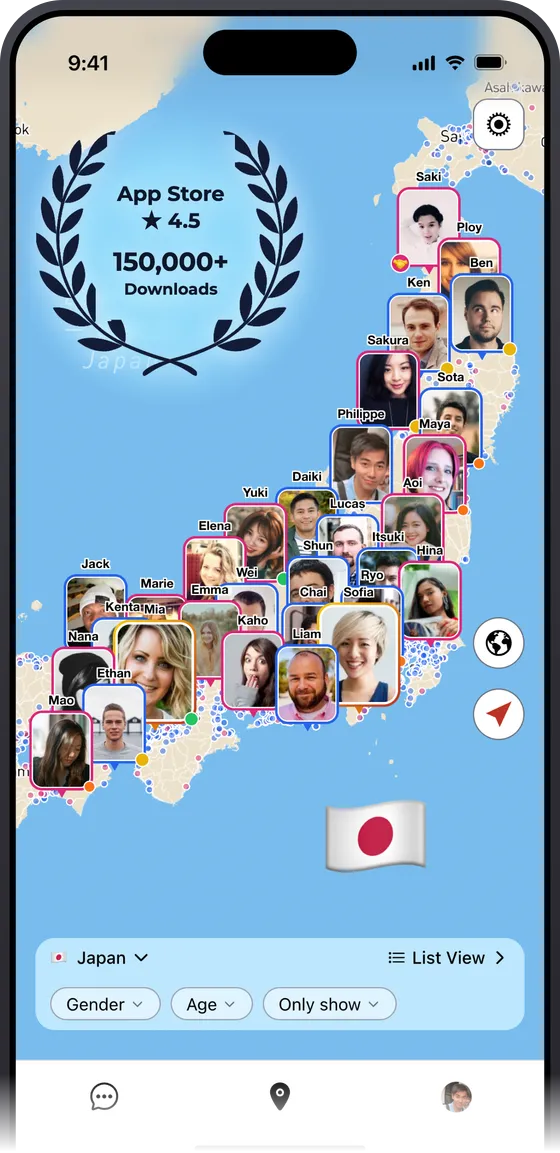
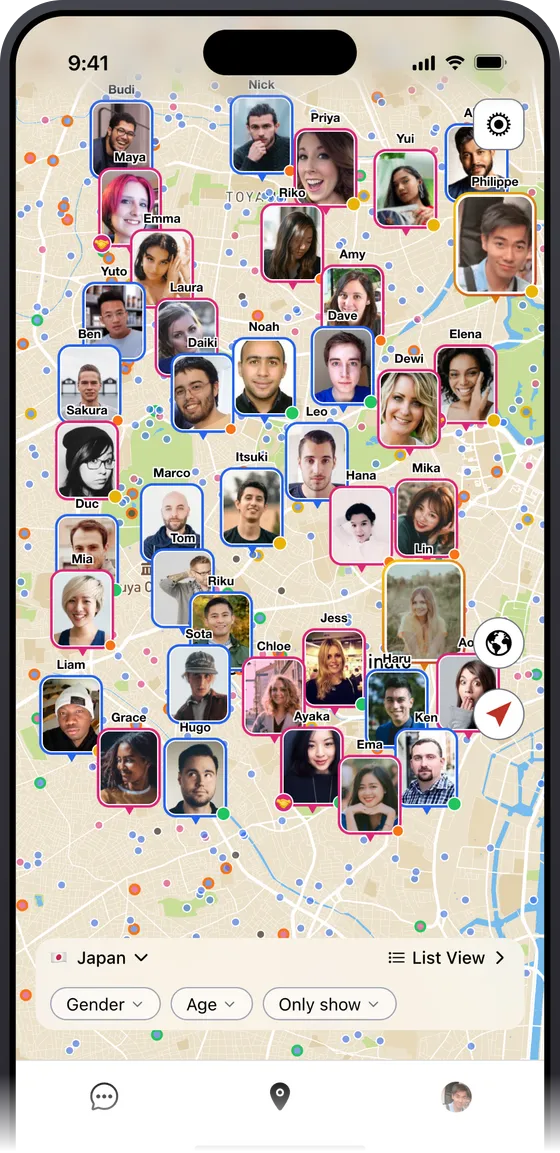
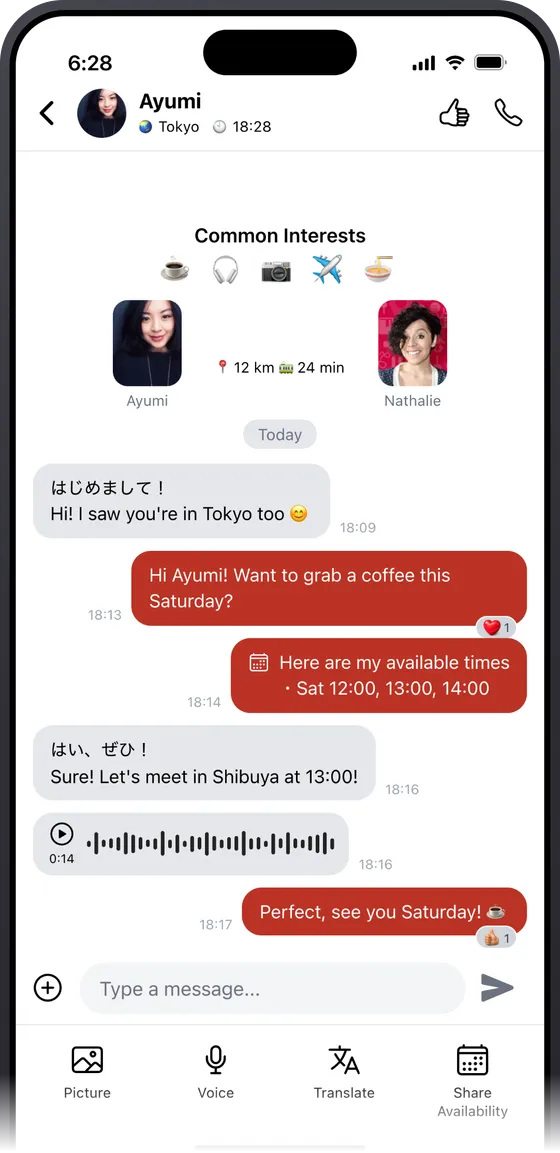


For a parent trying to bring more Japanese into family life, that might mean a coffee with someone who lives nearby, a regular English and Japanese exchange, or simply a local friend who knows which kids' activities are worth trying.
You don't have to fix everything this month. Pick one place in your kid's week where Japanese becomes the only option, and one step toward a local friendship of your own. Then give it time.
Kids' languages move with their lives. When Japanese becomes the language of their friends, their games and the people their parents like spending time with, it usually stops being something they have to catch up on.
Ready to build a more Japanese-speaking circle around your family? Download SewaYou and see who is nearby.