Every "must-have Japan apps" listicle on the internet is the same five: Google Maps, Hyperdia, Suica, Google Translate, Line. They are not wrong. They are also not useful. You'd download those anyway the first time you tried to plan a trip to Shibuya.
The list nobody writes is the one the foreigners who actually stayed (and the locals who watched them flail through month one) would hand you. Half of these you've never heard of. One of them you can start using before you book your flight.
Short answer: the Tokyo apps worth downloading before you move are SewaYou (people and friends), Tabelog (restaurants), NAVITIME (trains), a Sakura Mobile or Mobal eSIM (data from landing) and PayPay (cashless payments, once you have a Japanese number). Install SewaYou and the eSIM before your flight; the rest can wait until week one.
Most "moving to Tokyo" guides assume you start making local friends after you arrive. That is exactly the wrong order.
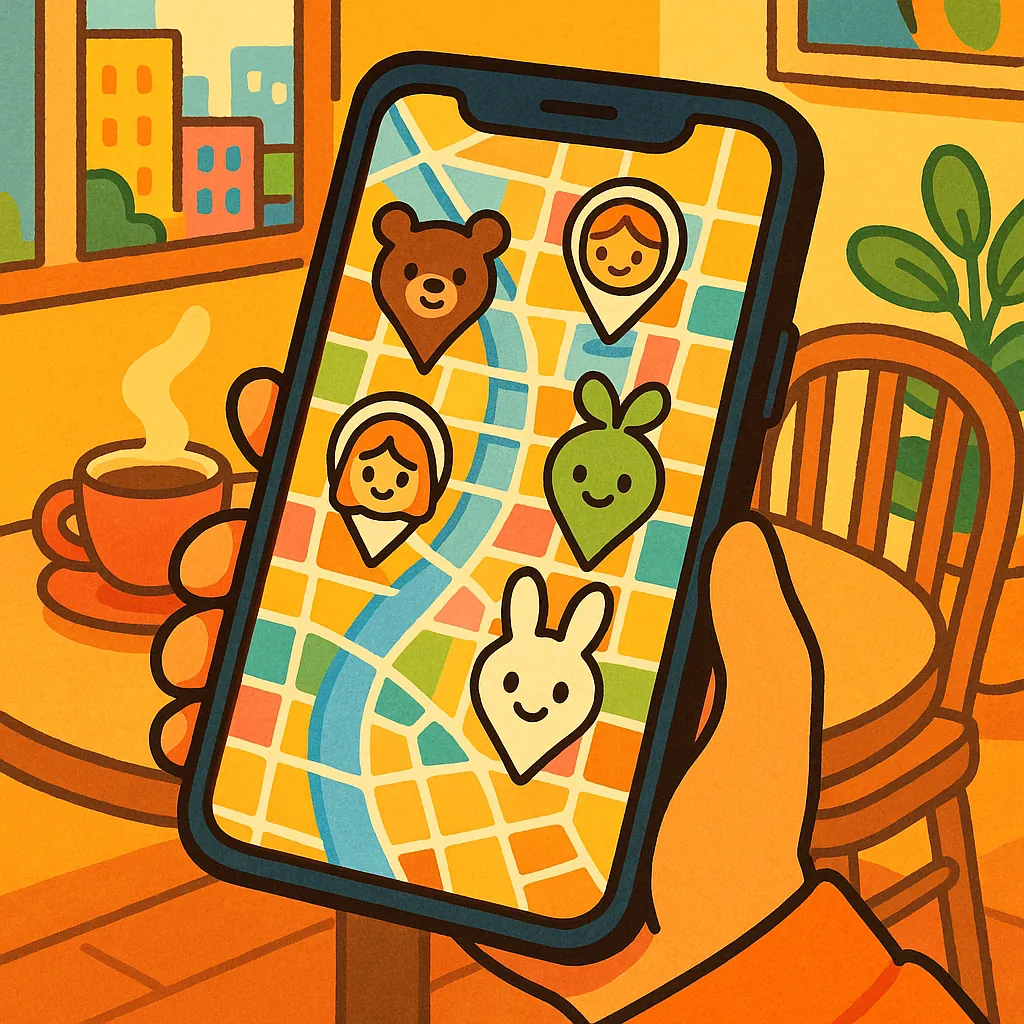
SewaYou is a map-based app that shows you real foreigners and locals near a chosen location who want to grab coffee, explore the city, or just have a neighborhood human to text. You can set the map to Tokyo from anywhere in the world. Look at Shimokitazawa, Kichijoji, Nakameguro, wherever your future apartment is, and you can already see who lives there.
Make Japanese Friends On a Live World Map


No swipes. No matches. You see a real person on a map, you say "I'm moving here next month, want to grab coffee my first weekend?", and with a bit of luck you have a plan for your first Saturday before you even land.
The locals on SewaYou are not strangers performing tourist patience. They are people who genuinely like meeting someone fresh to their neighborhood. The math is the opposite of a dating app: low pressure, no romantic queue, just a real person two blocks from your unfamiliar new station.
Install SewaYou tonight, set the map to your future neighborhood, send three messages. Your "I just landed and know nobody" month becomes "I have coffee plans Saturday."
Google Reviews in Japan is a desert. Most Japanese people do not leave Google Reviews. The 4.2-star ramen shop on Google is probably a tourist trap. The 3.5 on Google might be the best in the ward.
Tabelog is where actual Japanese people review restaurants. The scoring scale is different: 3.5 is genuinely good, 3.8 is a destination, anything above 4.0 is a once-a-year reservation. Learn the scale, ignore Google, and you eat like a local from week one.
The catch: most of Tabelog is in Japanese. Use the app's English mode, or paste menus into a translation app. The reviews translate cleanly enough.

Google Maps is fine for Tokyo trains. It is not great. It will routinely suggest a transfer at Shinjuku that costs you 15 minutes of escalator walking when there is a one-train option you didn't see.
NAVITIME (or the lighter "Japan Transit Planner" by NAVITIME) gives you platform numbers, the cheapest route, the fewest transfers, and crucially the "which car to board so you exit closest to the right gate" detail that locals all silently use. It is the single biggest quality-of-life jump for a new arrival in Tokyo.
Pocket Wi-Fi is dead. eSIMs are how locals and informed expats keep their phones connected the moment they exit the plane at Haneda or Narita.
Set up Sakura Mobile or Mobal before your flight. The eSIM activates the second you turn on your phone in Japan. You skip the airport SIM-vending machine line, you skip the daily pocket Wi-Fi rental fee that everyone hates by week two. Your foreign credit card works for the signup.
This is the boring practical one. Nobody talks about it. Every long-stay foreigner you'll meet here will tell you it was their best week-one decision.
Japan is more cashless than the "Japan is a cash society" stereotype admits, especially in Tokyo. PayPay is the dominant Japanese payment app. Almost every small shop, izakaya, and convenience store accepts it. Your foreign card sometimes does not.
Set up PayPay once you have a Japanese phone number (week one). Until then, run on a Wise card or a no-foreign-fee credit card. By month two you'll be tapping PayPay at the konbini reflexively like everyone else.

If you only download one app from this list before your flight, make it SewaYou. The others save you yen and time. SewaYou saves you the month of loneliness that the other guides assume is just part of "settling in." It is not. It is a fixable problem, and the fix starts before you board the plane.
The rest of the list you can install in the cab from the airport. The Tokyo map on SewaYou should already have a few "yes, coffee Saturday" replies by then.
The best Tokyo apps for someone moving there are SewaYou for meeting people, Tabelog for restaurants, NAVITIME for trains, an eSIM such as Sakura Mobile or Mobal for data, and PayPay for cashless payments. Google Maps, Google Translate and LINE are worth having too, but you will install those anyway.
SewaYou and your eSIM. The eSIM gets you online the moment you land, and SewaYou lets you set the map to Tokyo from home and line up coffee plans before you arrive.
Usually not. PayPay's help pages say overseas mobile numbers cannot be used and a Japanese mobile number is required, so most people register in their first week, once they have a local number.
If you cook at home, yes. Japanese flyer apps like Tokubai and Shufoo! show the weekly sale flyers (chirashi) of nearby supermarkets and drugstores. They are mostly in Japanese, but prices and photos are easy to read, and many big supermarket chains also run their own flyer apps.
If you are moving to Tokyo solo, read How to Have Friends Waiting When You Land in Tokyo next, that is the practical playbook for the SewaYou step.
Moving to Kyoto or Osaka instead? Moving to Kyoto Alone? Make Friends Before Your Flight and Moving to Osaka Solo: The Pre-Arrival Move That Saves You 3 Lonely Months cover the same playbook with city-specific tactics.