

A couple I know in Tokyo had their first baby in spring. The kind of newborn who treats 3am as prime time. Their apartment, like most apartments here, is built out of optimism and drywall, so the crying did not stay in their unit. It went sideways, downward, and probably out to the street.
Within a week they were not really losing sleep over the baby. They were losing sleep over the neighbors. What must the family downstairs think. What about the older man next door. Should they apologize. With what. A note. A bag of cookies hung on the doorknob. An actual knock on an actual door.
If you have ever stood in your genkan rehearsing "sumimasen, moushiwake arimasen" before a five-meter walk you were terrified to take, this one is for you.
You are not the problem.
Here is the reframe nobody offers when you are panicking about noise. In most of daily life in Japan, there is no socially clean way to knock on a stranger's door and start a relationship. You cannot just introduce yourself for no reason. The culture does not really have a slot for that.
But an apology has a slot. A move-in greeting has a slot. A small "sorry about the noise" gift has a slot. These tiny rituals are some of the only sanctioned reasons to stand at a neighbor's door and have them actually open it.
So yes, the crying is stressful. It is also the first legitimate excuse you have had to meet the people you live three feet away from. Most foreigners treat the apology as damage control, something to survive and never repeat. The people who do well here treat it as an introduction wearing an apology's clothes.
Now the debate the couple actually had. Do you ring the doorbell and hand it over, or do you leave the gift hanging on the doorknob with a polite note and avoid the awkward face-to-face entirely?
Leave it on the doorknob and you have technically apologized. You have also told your neighbor, without meaning to, that you would rather not deal with them as a person. A bag on a handle is a transaction. It closes the loop and opens nothing.
Ring the bell.
Stand there, bow a little too much, say the clumsy Japanese you have been rehearsing, and let them see your face and the baby if you have them on your hip. The ten seconds of awkwardness is the entire value of the gesture. After that, you are not the mystery unit with the screaming infant. You are the nice tired couple from upstairs, and a screaming infant from the nice tired couple upstairs is a completely different sound than one from strangers.
If you genuinely cannot catch them home after a couple of tries, then a note plus a gift is a fine fallback. Just make the note warm and specific, not a form letter. And try the bell first.
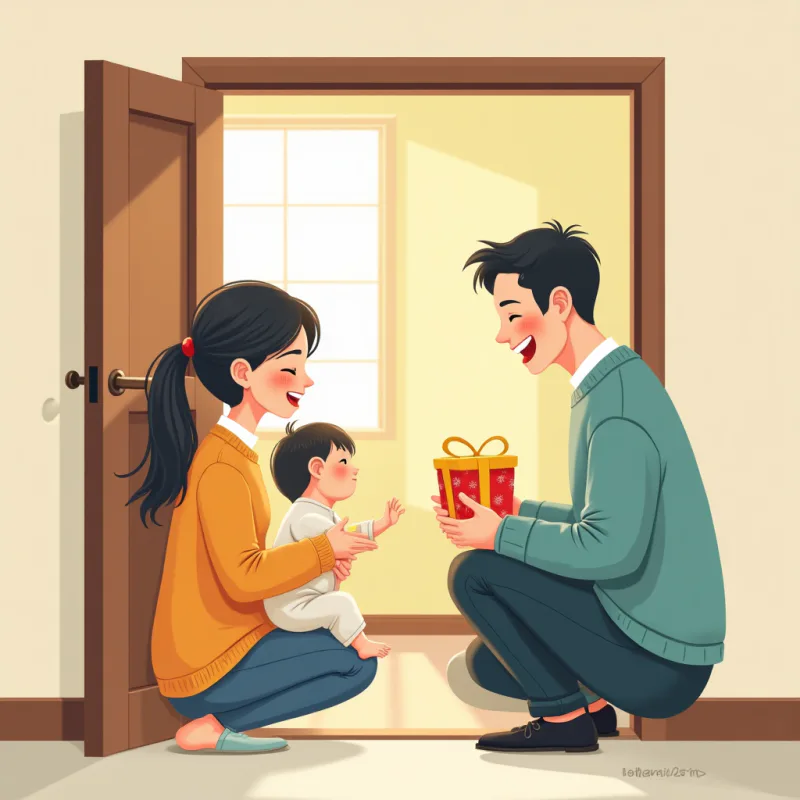
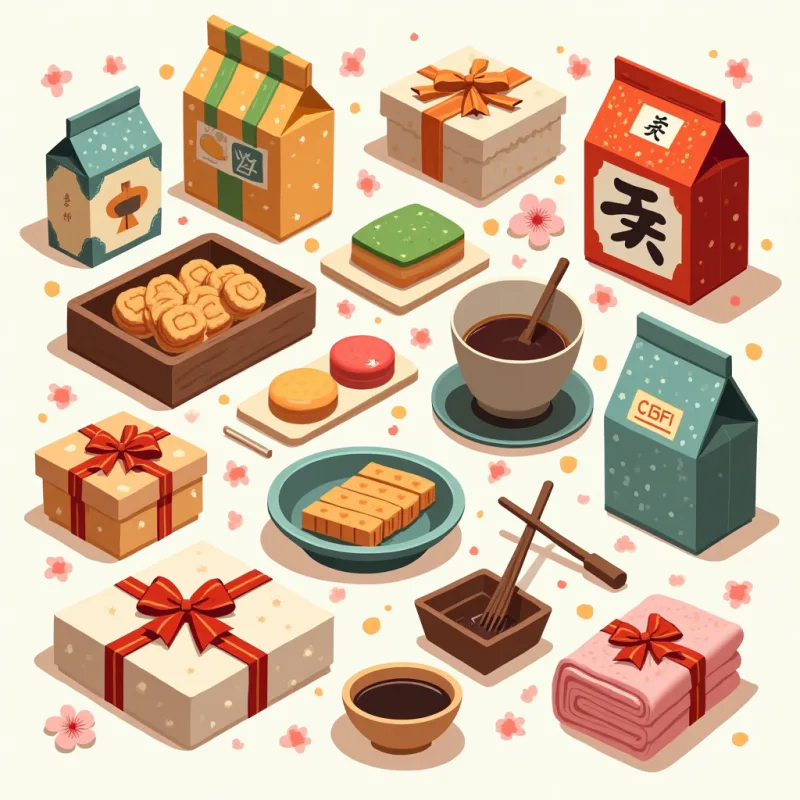
People agonize over what to bring like it is a test. It is not a test. The gift is just the reason your hand is full and your intentions are obvious. Keep it cheap, safe, and easy.
Individually wrapped, nothing that needs cooking.
Good defaults are a box of individually wrapped sweets or senbei, nice drip coffee or tea bags, or a small set of quality hand towels. Aim for something in the 1,000 to 1,500 yen range. Department store basement food halls and any decent confectionery shop wrap these for exactly this purpose, so you are not inventing anything.
Read the neighbor a little. The family downstairs with a toddler will appreciate snacks the kid can have, so individually wrapped and not too sugary wins. The single older man next door tends to do better with something practical and low-commitment, which is where coffee, tea, or towels quietly beat a giant box of cookies he will never finish. You are not buying forgiveness. You are matching the gift to the human.
One more thing. You do not owe the entire building. The unit directly below you and the immediate neighbors who actually hear the noise are plenty. This is a greeting, not a tax.
Here is what was actually keeping that couple awake. Not the decibels. The isolation. A newborn in a foreign country, no family on the same continent, two exhausted people convinced that every neighbor secretly resents them and that they have no one to ask whether any of this is normal.
The noise was real. But the spiral around it, the certainty that you are an imposition that everyone tolerates and nobody welcomes, that is the part that makes new parenthood abroad so heavy.
You are not meant to do this alone.
The apology gift fixes ten seconds of it. The older man downstairs turning out to be a retired guy who raised three kids and is weirdly delighted to hear a baby in the building again, that fixes a lot more. But that only happens if you ring the bell, and even then, two neighbors is a thin safety net for a family that is far from home.
What new parents abroad actually need is a wider circle. Other parents who get the sleep math. Locals who can tell you which clinic speaks English. Other internationals a train stop away who have been through the exact same week you are having. That circle does not show up on your doorknob. You have to go find it.

The bell with your neighbor and the wider search are the same skill, really. Both are just a willingness to start one slightly awkward conversation with someone nearby and see what it turns into.
One conversation is the whole ballgame.
That is the whole bet SewaYou is built on. It is a map-based app that shows you the locals and internationals around you who actually want to meet new people, so you can find the other parent two buildings over, the local who loves practicing English, the person who survived their own newborn-in-Japan year and remembers exactly how it felt. You filter by language, interests, and how close they are, and you skip the part where you wonder if reaching out is weird.
Make Japanese Friends On a Live World Map
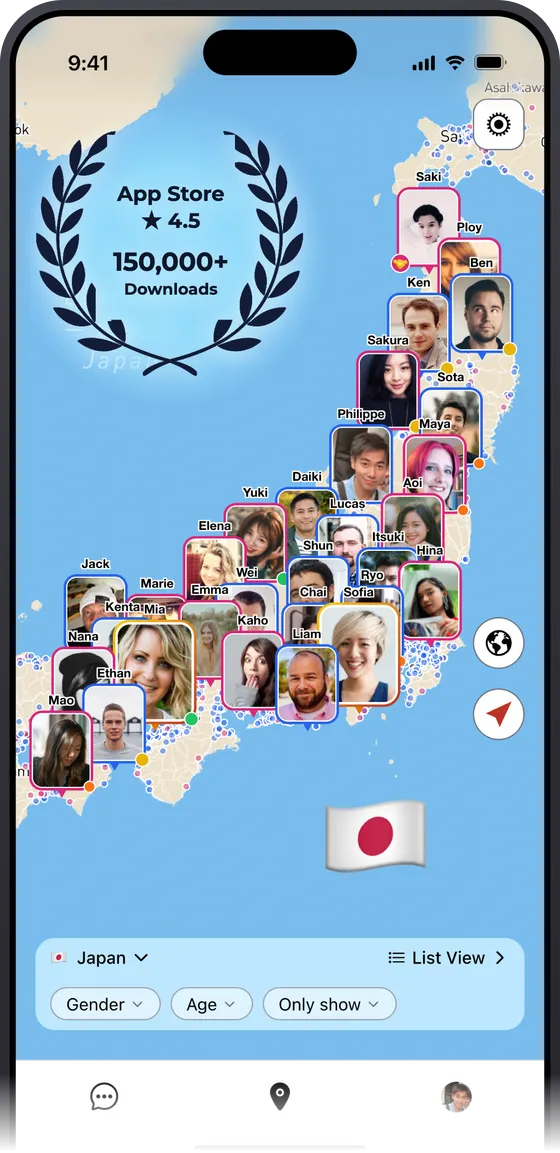
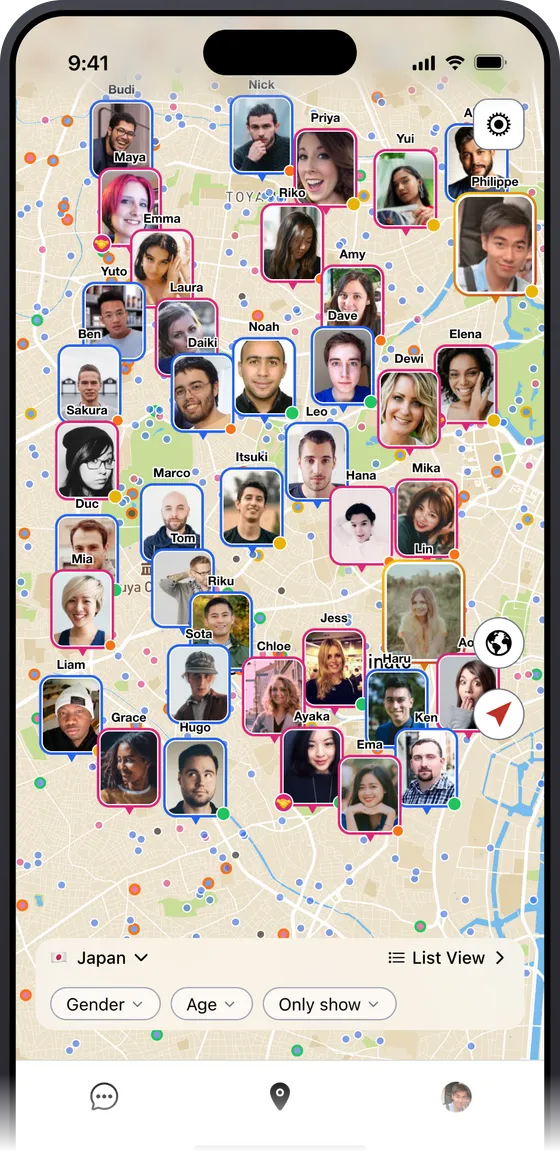
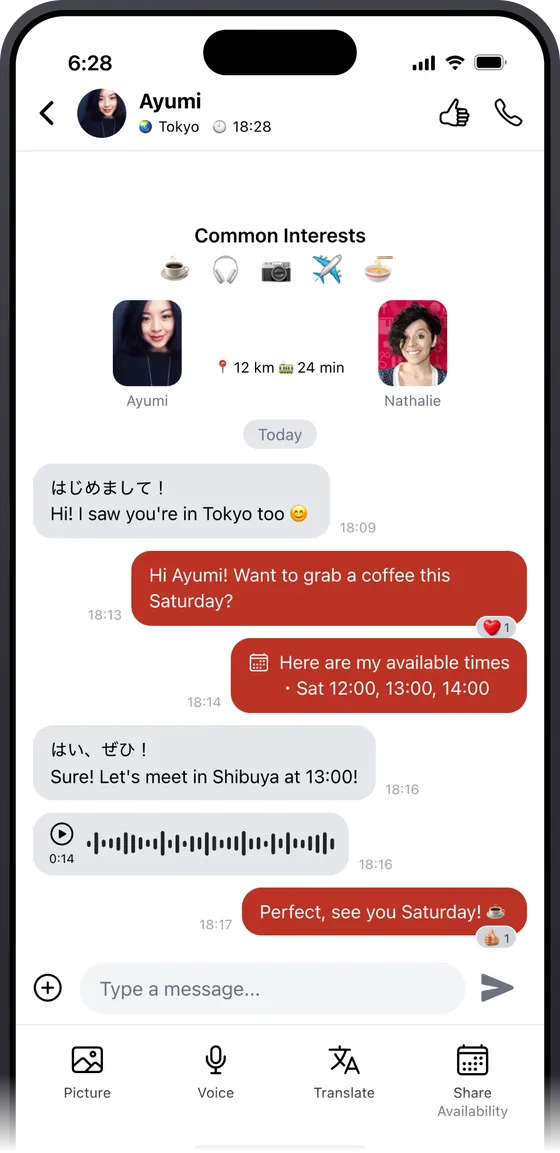


So apologize properly. Ring the bell, hand over the cookies, bow too much, and let your neighbors meet the real you. Then keep going. The neighbor downstairs is the first door. SewaYou is how you find all the others, the village that turns a hard, lonely year into one where you actually know the people around you.
The crying will stop eventually. The friendships you build because you were brave enough to knock will not.


