

A man told me recently that he had been turned down by eleven apartments in six weeks. He has N1. His partner is Japanese, born and raised in the same city they were trying to move to. On paper they were close to the easiest tenants a landlord could ask for: stable income, a guarantor company lined up, a native speaker on the lease. And still, eleven times, the answer came back through the agent in the same soft, apologetic shape. The owner would prefer a Japanese tenant. Nothing personal.
By the eighth rejection he had stopped reading the messages out loud. By the eleventh he was sitting in a Doutor with a cold coffee, asking his partner, quietly, whether something was wrong with him specifically. The math no longer made sense to him.
Nothing was wrong with him. That is the part nobody says clearly enough.
Never about his Japanese.

The first thing that happens when a foreigner hits this wall is that they start auditing themselves. Maybe my income looks unstable. Maybe my visa status worried them. Maybe if I had spoken more politely on the phone. You run through every variable you can control, because controllable variables feel fixable, and the alternative feels worse.
The alternative is usually the truth. A lot of these rejections never reach the level of you at all. A property owner decided years ago, in the abstract, that they would rather not rent to foreigners, and the agent is simply relaying a policy that was set long before your name came up. It is not a judgment of your paperwork. It is a blanket that was thrown over a category, and you happened to walk under it.
That does not make it less exhausting. Getting told no for who you are, repeatedly, in a language you worked years to master, wears a specific groove in you. But understanding where the no comes from matters, because it tells you where the no does not come from. It does not come from a flaw you can study your way out of.
A category problem, not a you problem.
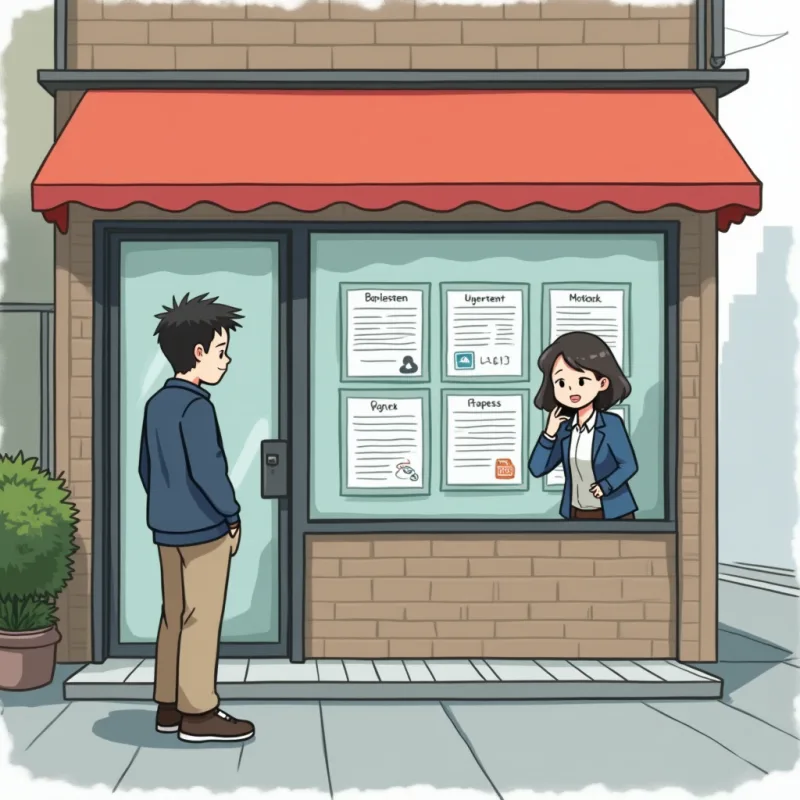
The instinct, especially for people who are good at studying, is to treat the housing wall like the JLPT. If I level up, the door opens. If I get rejected at N3, surely N1 fixes it.
The man with eleven rejections is the proof that it does not. He already has the ceiling. His partner is the language and the local context and the cultural fluency, sitting right there on the lease, and the door still did not open. There is no flashcard for this. There is no grammar point you are one Anki streak away from unlocking that suddenly makes an owner who does not rent to foreigners rent to you.
This is hard to accept because the language-study path is the one piece of life in Japan that actually rewards effort in a clean, legible way. You put in hours, your Japanese improves, you can feel it. So when something hurts, the trained response is to throw more study at it. But the apartment hunt is not a knowledge test. It is a trust-and-access problem, and trust and access do not live in your textbook.
Not a knowledge test.
Here is the thing the man figured out around rejection number twelve, which was the one that worked. He stopped searching portals and started asking people.
A Japanese acquaintance of his partner mentioned an agent two stations over who had rented to a couple of foreigners before and did not flinch. One introduction. One phone call where someone the agent sort of knew said these are good people, take care of them. The viewing happened that weekend. The application went through without the apologetic dance. Same income, same visa, same N1, same everything that had failed eleven times. The only new variable was a person standing between him and the gatekeeper.
That is what most foreigner-friendly apartments actually run on. Not a website filter. A chain of people who vouch for the next person. The agencies that say yes are usually found through someone who already got a yes there, and the guarantor anxiety that sinks a cold application quietly dissolves when there is a face and a name attached to the request.
A network problem in a language costume.

If you ask the man what the worst part of those six weeks was, he will not say the eleven no's. He will say the hours in between, alone with the math.
Because the rejections themselves are quick. It is everything around them that does the damage.
The hours in between, not the no's. Sitting in the Doutor not knowing whether eleven was a normal number or a catastrophic one. Not knowing which agencies were worth trying and which were walls. Not having anyone who had walked through this exact thing to tell him, without drama, that it is common, that it is not him, and that there is a side door. His partner could only do so much, because his partner was inside the same anxiety with him, not standing outside it with perspective.
What he was missing was not Japanese and not a better listing. It was a couple of local people in his corner. People who know which fudosan is relaxed about foreigners, who will make the introduction, who answer is this normal with a flat yes and turn a spiral back into a solvable afternoon. That is the difference between a six-week ordeal and a Tuesday phone call.
You do not assemble that network during a crisis. You have it already, or you do not, and the housing hunt just reveals which one is true.

This is the part of life in Japan that the guides skip, because it does not fit on a checklist. You cannot download a guarantor. You cannot study your way to someone who picks up the phone for you. The interpretive bandwidth that turns Japan from a series of ambiguous walls into a navigable place comes from one source: actual local people who know you.
That is the entire reason SewaYou exists. It is a map-based app that shows you the people near you who are open to meeting, Japanese locals and fellow foreigners alike, so the network you will desperately need during the next apartment hunt is something you build casually over coffee now, long before any landlord says no. You are not collecting language partners. You are building the corner that catches you.
Make Japanese Friends On a Live World Map
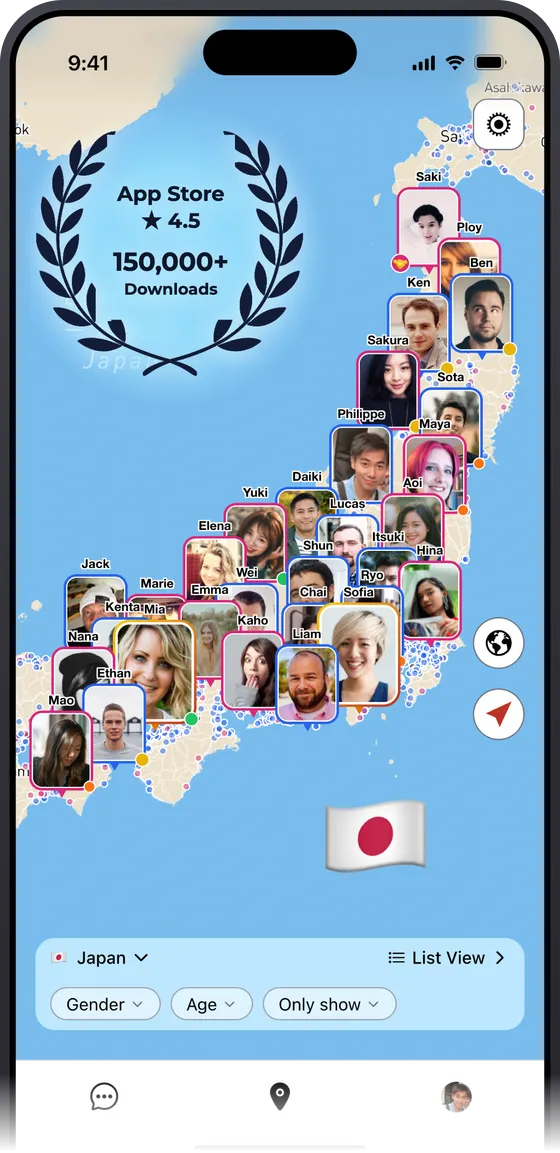
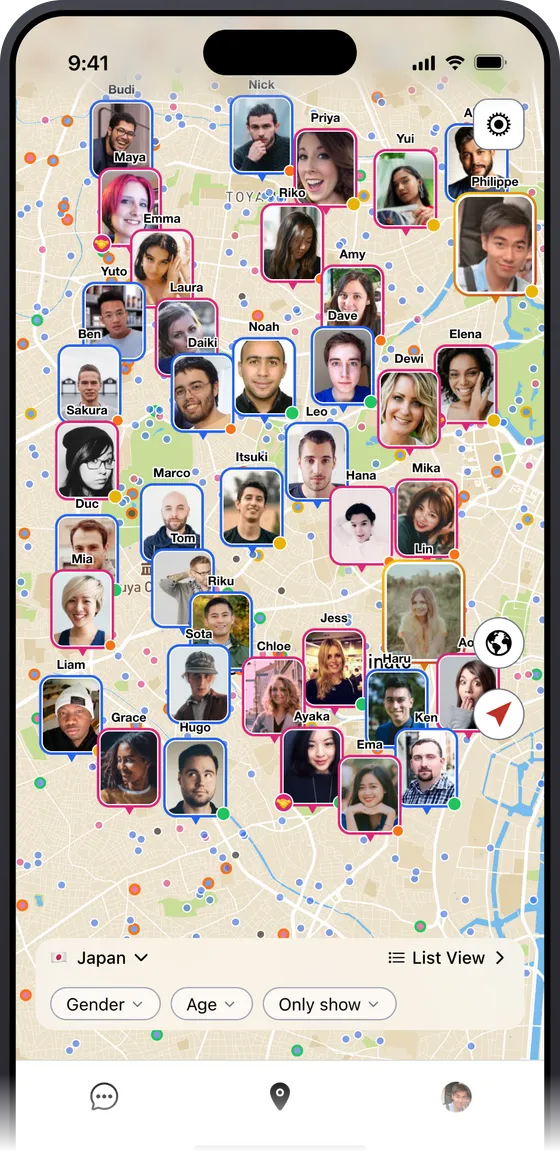
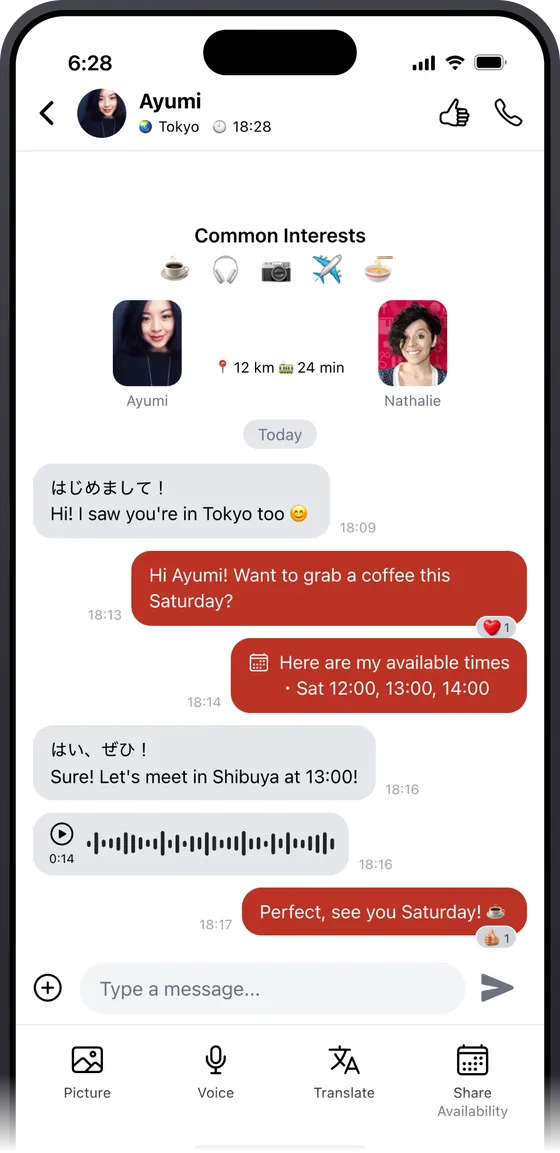


The man with eleven rejections has a place now. He also has, for the first time in two years, three people in the city he can text a stupid logistics question at 9pm and get a real answer from. He will tell you the second thing mattered more than the apartment.
If you are deep in the housing wall right now and starting to wonder if it is you, it is not. Stop studying for a test that does not exist, and start building the handful of local friendships that quietly unlock every wall after this one. SewaYou is where that starts. The door opens through people. It always did.


