

A learner I met last winter had been studying Japanese for two years. He was mining vocabulary from anime, manga, YouTube, Satori Reader. His Anki deck had grown to 3500 cards. His daily reviews were taking ninety minutes. On bad days, two hours.
He had a full-time job. He had hobbies he had not touched in months. And he was starting to feel that the reviews were eating the immersion that was supposed to feed them. He still believed Anki was the best tool he had. He just no longer had time to use anything else.
I asked him a question that landed harder than he expected. "Of those 3500 words, how many have you actually said out loud to a Japanese person in the last month?"
He went quiet.
The deck had become the practice.
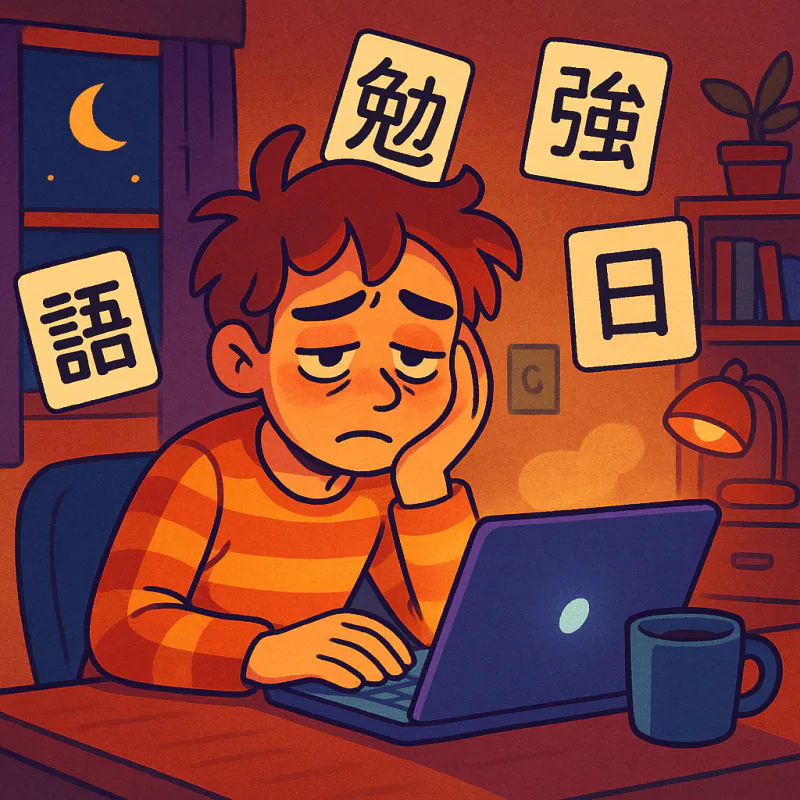
Here is how the trap closes. You start mining vocabulary from real input. That is great. Every word you add feels earned, because you saw it in something you actually wanted to watch. So you keep mining. Five new cards a day. Sometimes eight. The deck grows.
The reviews grow with it, on a delay. By month six, you are reviewing words from month two that you have not seen anywhere in eight weeks. By year one, the daily review count is much bigger than your daily new word count, and the gap keeps widening. You did not double your study. The math just caught up to you.
This is normal. Anki is doing exactly what it was designed to do. The problem is not Anki. The problem is what Anki started to replace.
You used to immerse for two hours and review for thirty minutes. Now you review for two hours and immerse for thirty. The deck became the floor of your day. Everything else became optional. And the thing it quietly pushed out first is the thing that actually moves you forward.
Anki trains one thing very well. You see a word, you remember its meaning. That is recognition. It is the cheapest form of knowing a word.
Production is different. Production is the word arriving in your mouth at the right moment, in the right form, with the right particle, before the conversation moves on. There is a wide gap between the two, and Anki does not narrow it. Cards are silent and patient. Conversations are loud and impatient.
Recognition is the cheap half.
You can have 3500 cards at 85 percent retention and still freeze when a Japanese friend asks what you did last weekend. Not because the words are not in your head, but because they have never made the trip from the back of your head to the front of your mouth under time pressure. The cards trained the wrong half of the skill, and the only way to train the other half is to put the words in front of someone whose patience is finite.
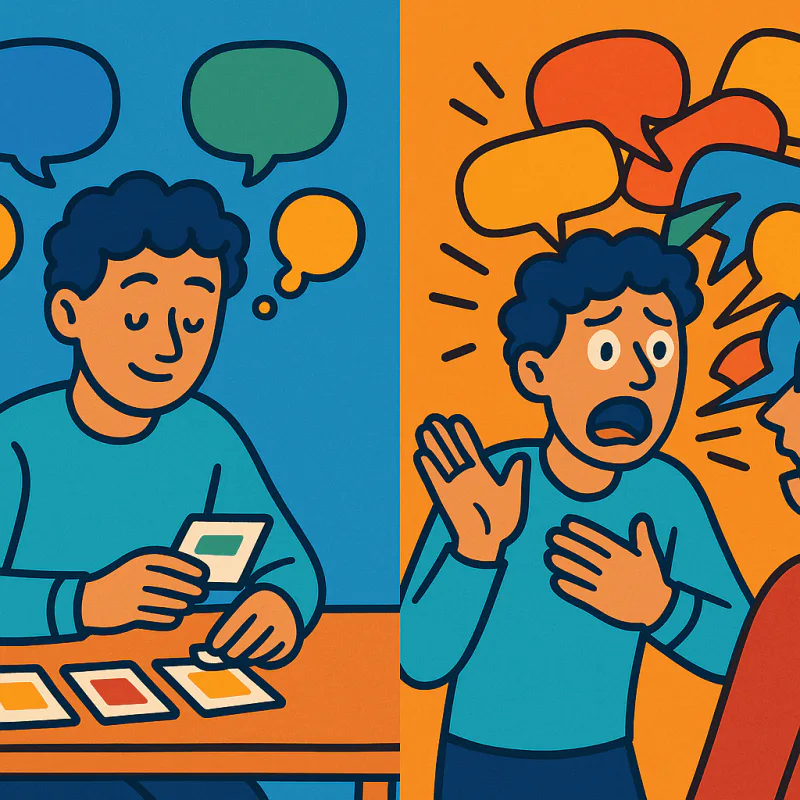
Here is an experiment most heavy Anki users will refuse to run. For one month, cut your daily reviews in half. Take the hour you reclaim and spend it on one real conversation with the same Japanese person, every week, for the whole month.
What happens is not what you expect. You will feel guilty at first. You will watch the overdue card count climb, and your brain will tell you that you are losing ground. You are not. You are finally measuring ground in the unit that counts.
By week three, you will start noticing words from your deck arriving in your conversations on their own. Not because you reviewed them more. Because you finally needed them.
Use is the only real review.
A word you used once with a person you know is more durable than a word you reviewed twenty times alone in your kitchen. The brain remembers the moment, the face, the laugh that followed. SRS algorithms do not have access to any of that, which is why their grip on a word is always weaker than a single good conversation's.
This is the quiet truth nobody mentions in the immersion crowd. The active vocabulary of a fluent adult speaker is far smaller than the passive vocabulary. You will recognize tens of thousands of words across a lifetime of reading. You will use a few thousand. The two numbers grow at very different rates.
When you mine indiscriminately from anime and manga, you are loading your active practice with words from your passive set. Some of those words are common and worth knowing. Many are flavor words for a specific scene, a specific genre, a specific writer's style. You will see them in that one show and never again. They are still in your deck, still demanding reviews, still sitting between you and a conversation.
A native speaker around you would have been a free filter. They would have heard the word, told you whether real people use it or whether it is a manga thing, and saved you the next four years of reviewing it. You did not have that filter, so the deck has it instead, and the deck does not know.
Here is the part most learners never see coming. When you start meeting one regular Japanese friend in person, your relationship to the deck changes within a few weeks. You stop adding random cool words from anime and start adding the words you wished you had said last Tuesday. The deck shrinks. The reviews shorten. Retention goes up, because every card now has a face attached to it.
You also start dropping cards. Words you thought were essential turn out to never come up in real life. Words you skipped because they seemed too basic turn out to be the actual glue. The friend is doing for free what no SRS algorithm can do. They are telling you what is alive in the language and what is decoration.
The friend is the filter you never had.
This is why heavy Anki users who finally start speaking regularly often describe the same thing. The reviews drop from two hours to twenty minutes within a few months, not because they study less, but because they finally know which words deserve to be in the deck.

If your Anki reviews are eating your immersion time, the warning sign is not that you need a better tool. It is that the tool has become the goal. The fix is not optimizing FSRS settings or trimming new cards. Those help, but they do not solve the underlying issue, which is that you are spending almost all of your daily Japanese hours alone with a screen.
The cheapest, most effective change you can make is to put one hour of your Anki time, every week, in front of a real person. Same person, every week. Let them be the filter your deck never had. Let them be the reason you actually need the words. Let your retention be measured in jokes that landed, not in cards that flipped green.
Make Japanese Friends On a Live World Map
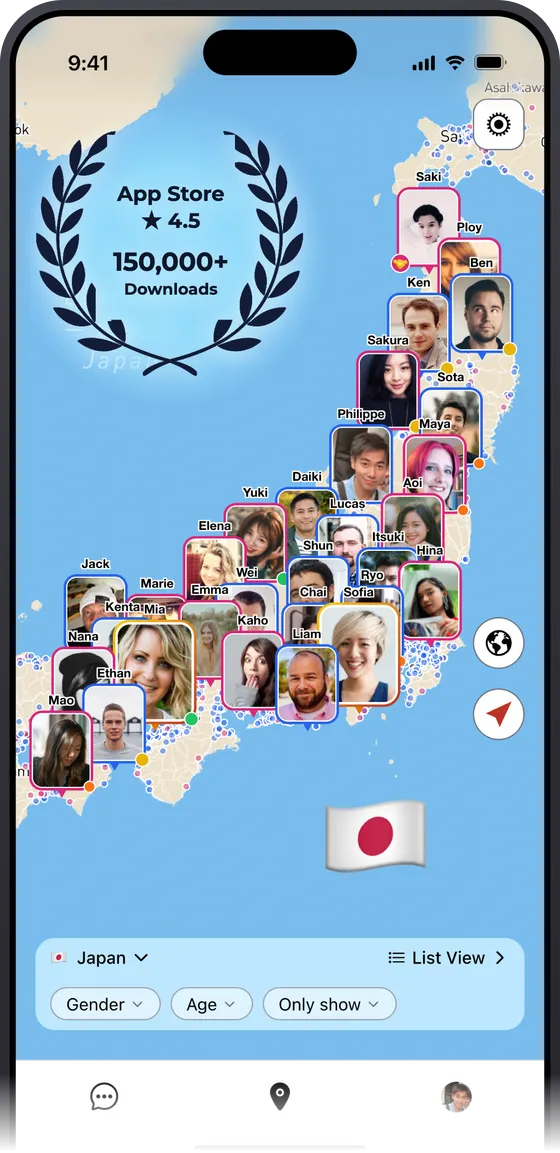
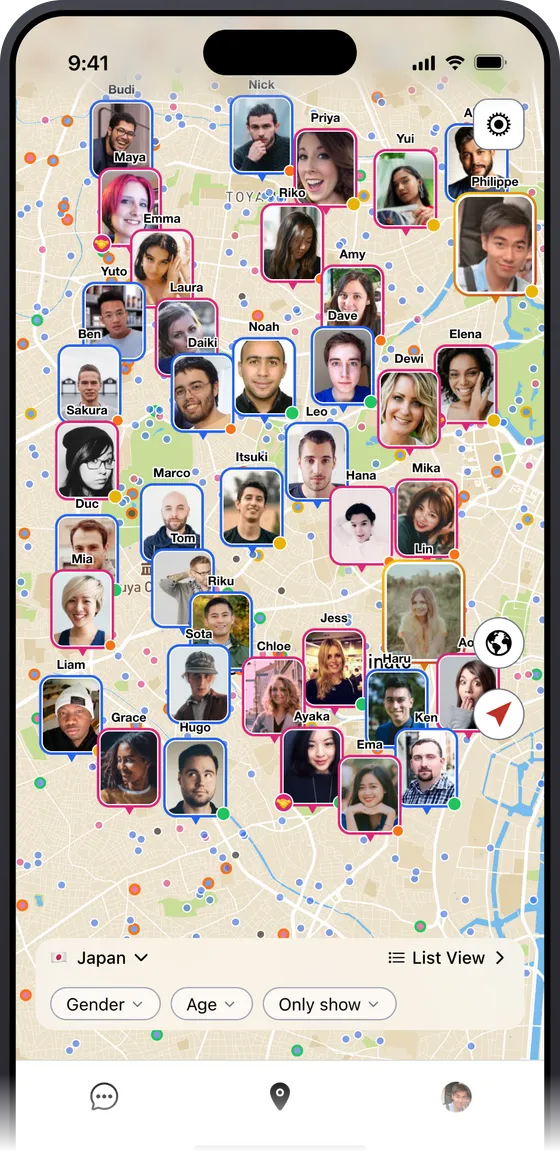
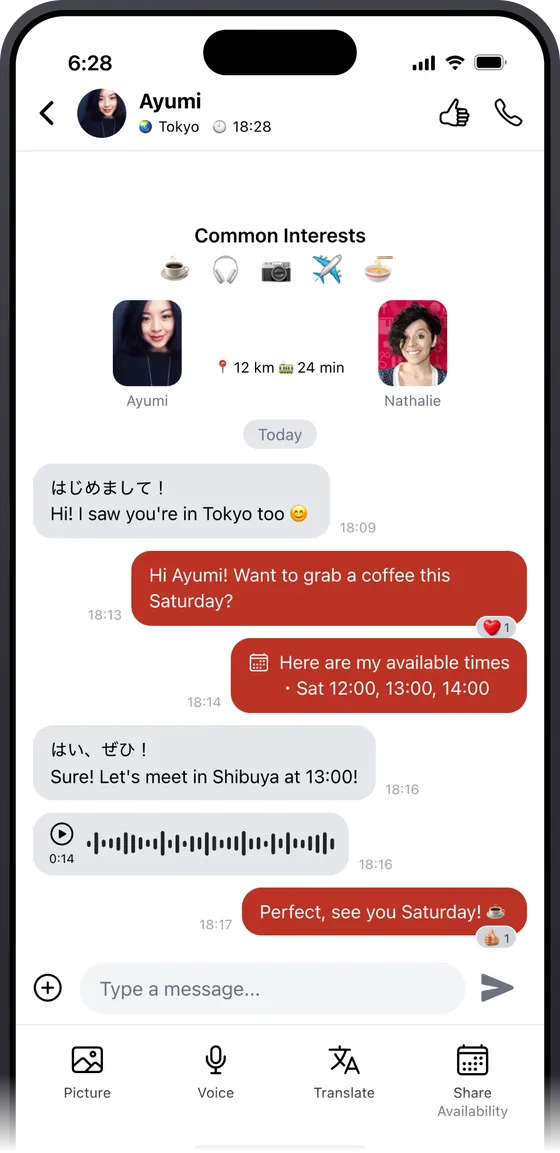


SewaYou is a map-based app for finding locals near you who are genuinely up for meeting in person. Japanese people who want a foreign friend, foreigners who want a local one, both opting in upfront. Not another flashcard app. Not another tutor sitting on a stopwatch. A single person in your city who is willing to listen to you fumble through your week, week after week, until the words you have been reviewing for two years finally arrive in your mouth without having to be summoned.
The deck is the rehearsal. The person is the show. Most learners never make it to the show, because the rehearsal feels like progress and the show feels like risk. It is the opposite. The show is where you actually learn.


